We taught AI to read the nervous system — from heartbeats.
The autonomic nervous system runs every organ in constant coordination. Reading it used to take a clinic. Our AI reads it from a wearable you already own.
The body isn’t 100+ specialties. It’s one system.
Medicine reads the body in slices. But the body runs as one integrated system, coordinated by the autonomic nervous system — the control layer beneath heart, sleep, hormones, metabolism, immunity, and digestion, in constant coordination.
CORE
HRV, one layer deeper.
Heart-rate patterns carry more than a single number — but parts of the signal are ambiguous about which autonomic branch they come from. Resolving them is a hard signal-processing problem. Our model separates sympathetic and parasympathetic activity from heart-rate data — turning one of the most commoditized sensors there is into a window on the body’s control layer.
A heartbeat trace goes in. Two branch-level activity signals come out — separated in the frequency domain, continuously, from a wearable’s data.
Meet CAJAL — the first AI model for the nervous system.
CAJAL is named for Santiago Ramón y Cajal (1852–1934), the father of modern neuroscience — the scientist who first revealed the nervous system as a network of individual cells, drawing by hand the architecture no one else could see.
CAJAL is a foundation model for the autonomic nervous system. It resolves the sympathetic and parasympathetic branches from ordinary heartbeat data — turning a raw trace into a readable picture of the body’s control layer.
CAJAL is trained on 25 years of patient clinical data.
One nervous system, seen twice — a century apart.
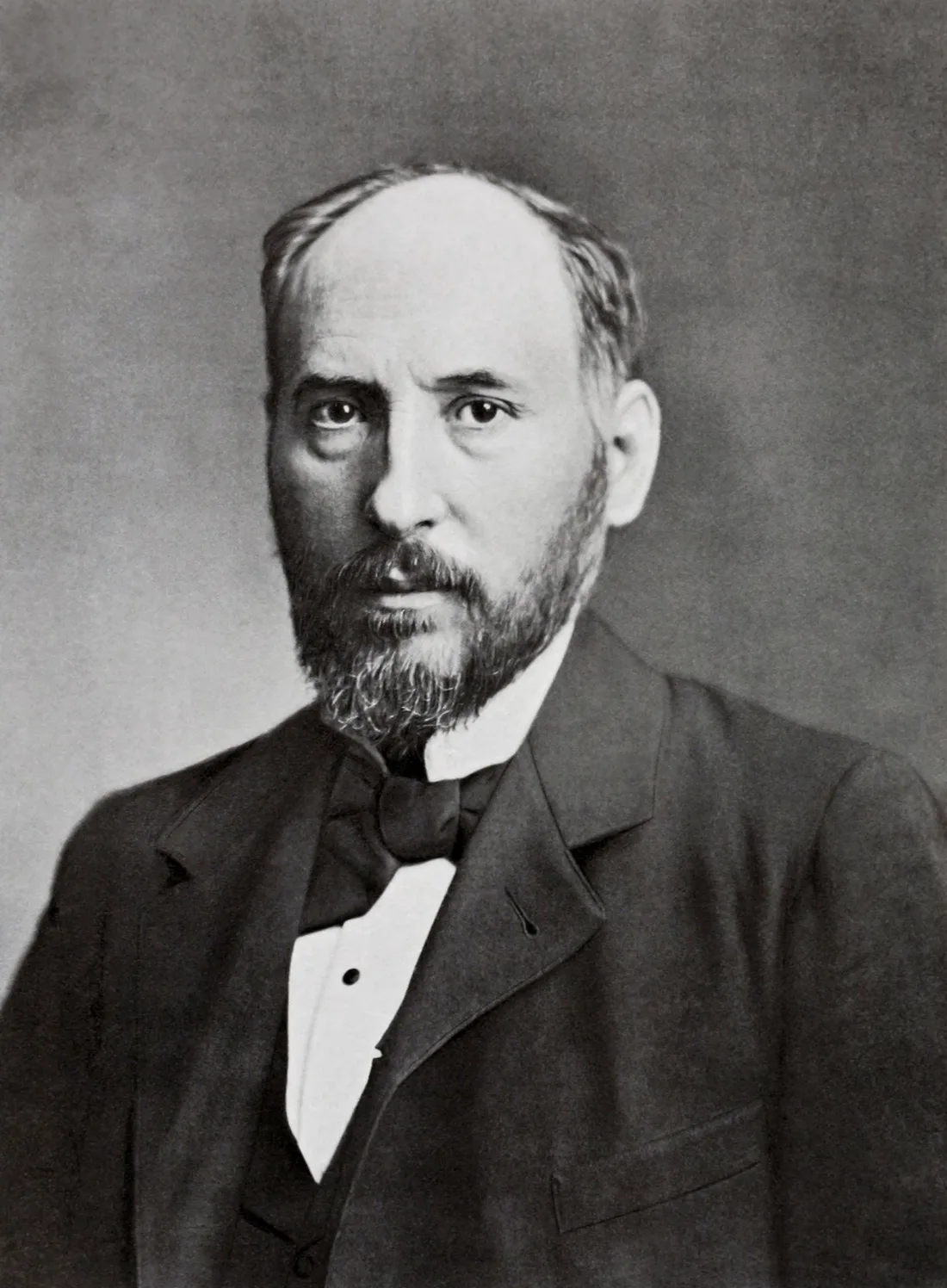
The observer
Santiago Ramón y Cajal showed that the nervous system is built from individual cells — the finding modern neuroscience rests on.
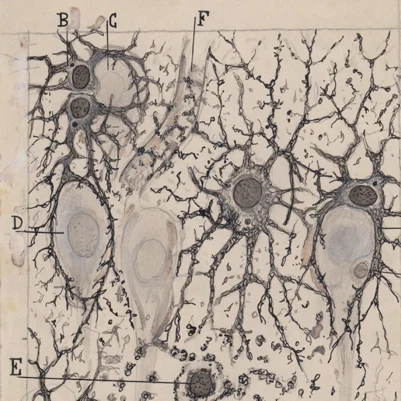
The drawing
No instrument could show that architecture, so he drew it — by hand, from what he saw down a microscope.
The model
CAJAL reads the same system's live signal — resolving the sympathetic and parasympathetic branches from an ordinary heartbeat trace.
One signal. Anywhere.
Because it runs on heart rate — one of the most commoditized sensors there is — autonomic measurement no longer needs a specialized clinic. Our mission is to make the body’s most important signal measurable for everyone, on a device they already own.
Specialized centers, dedicated equipment, limited access — waitlists and long consultations.
The same signal, from a simple heart-rate wearable. 12 minutes, at home, anytime.
A simple heart-rate band is enough — wherever you are.
Two questions: balance, and coherence.
At rest, the autonomic nervous system holds a balance between its two branches — that’s homeostasis. But a balanced system doesn’t just sit still; it responds. When the body is challenged — a deep breath, a change in posture — each branch should react in a coordinated, predictable way. Coherence is whether the body’s physiology responds in step with that expected pattern, or against it. The ANS Test measures both — the resting balance, and how coherently each branch responds across the test’s phases.
The test asks your body to do four things in turn. Each graph follows one side of your nervous system. The shaded band is where it should be in each phase. The line is where it actually went.
At rest, the two sides sit in balance. Under challenge they are not meant to stay balanced — each phase asks one side to lead and the other to step back. Coherence is whether that handover happens cleanly, phase after phase.
Illustrative figure. Not a result, and not intended to diagnose, treat, cure or prevent any disease or condition.
The coherence framework — autonomic resonance and coherence vs. resistance — is drawn from co-founder Dr. Ramesh Adiraju’s published work (J Rheumatol Arthritic Dis, 2017).
General-science figures describing the autonomic nervous system as a field of study. They are not evidence about any Autonomic Health product.
The science →Built on two decades of autonomic science.

Autonomic Health’s science is led by Dr. Ramesh Adiraju, our Chief Medical Officer and co-founder — a physician who has spent more than two decades studying the autonomic nervous system. He founded the Dysautonomia Research Institute (2005, now part of the company) and developed the autonomic coherence framework — resonance and coherence versus resistance — published in the scientific literature (J Rheumatol Arthritic Dis, 2017). His research is the scientific foundation the company is built on.

These citations describe the field and its science — not evidence of product performance.
AI-native, from day one.
Reading the autonomic nervous system at this scale isn’t possible without AI — it’s why we built the company around a model. The separation above is CAJAL at work: AI-based spectral separation of the two autonomic branches.
Make the body’s most important signal measurable for everyone, everywhere.
Engineers, physicians and researchers who came to the same signal from different directions.
Meet the team → AboutThe first step: make it measurable.
Our first product brings autonomic measurement home, for your own wellbeing — the first step in a longer journey to make the body’s control signal part of everyday health.
The storefront, pricing, and test experience live on the product site — not here.
The body’s most important signal, finally within reach.
You have carried this signal your whole life. We think you should be able to see it.
We exist to make autonomic measurement available to everyone, everywhere.